Filter, sort and group
A sheet holds everything. A view narrows it to what you are working on right now, using three controls in the bar above your records.
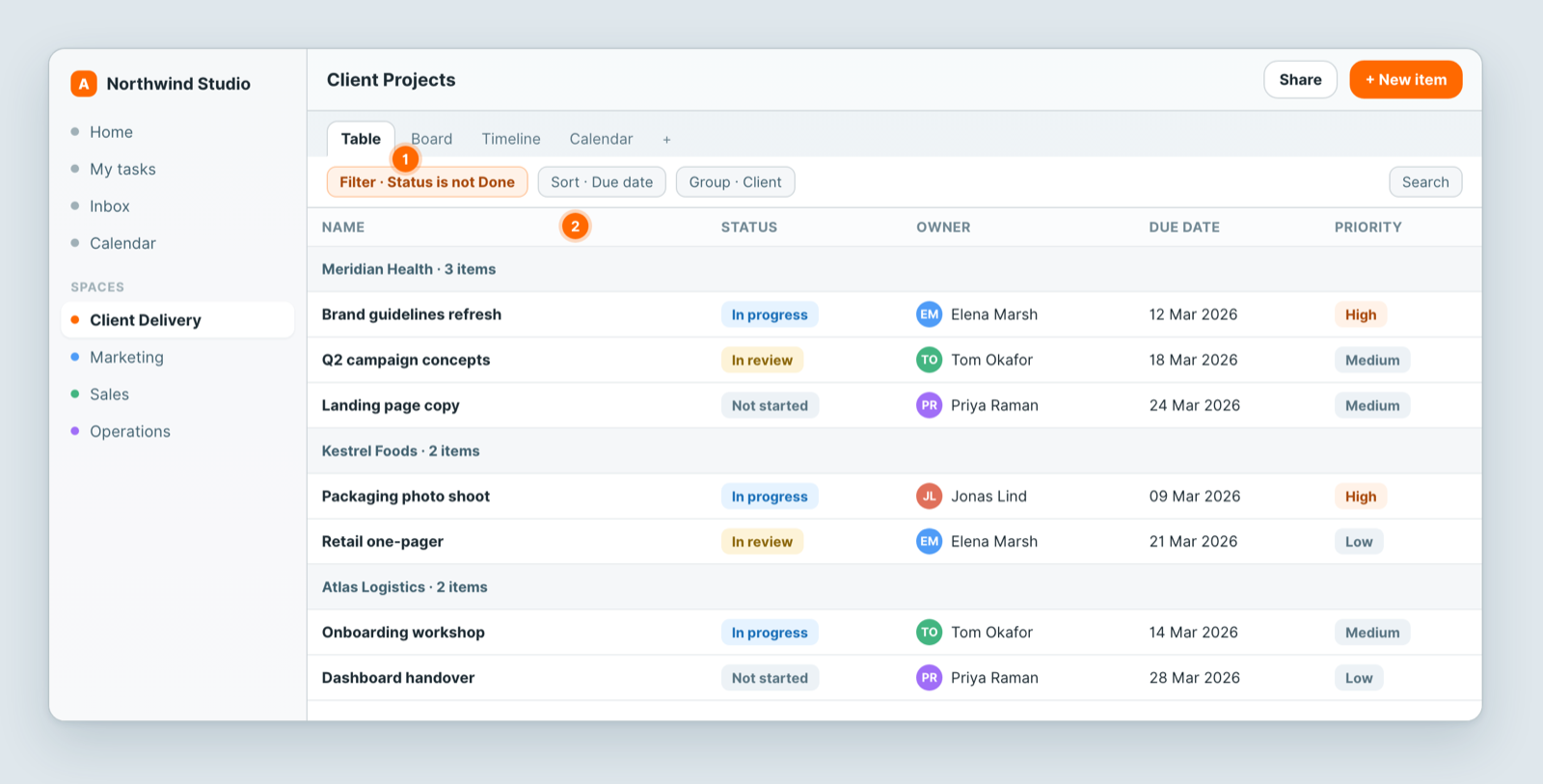
Filter — which records appear
Build conditions on any field: Status is not Done, Owner is me, Due date is this week. Combine several and they narrow together.
Date filters can be relative — this week, before today, this month — so the view keeps meaning tomorrow. A filter of Due date before today is a permanent overdue list; a fixed date is out of date the next morning.
Sort — what comes first
Order by any field. Sorting by due date is the difference between a list of work and a plan for the day.
Group — how records are bundled
Break records into sections by a field: by client, by owner, by status. Each section shows a count, which is often the actual answer — who has fifteen open items, which client is taking all the attention.
They are saved on the view, for everyone
These are not personal. A view is a shared object, so changing its filters changes them for everyone who opens it.
If you want a different cut, add your own view. That is what they are for, and it costs nothing — the data is not copied.
A pattern worth stealing
On a busy sheet, keep three views: My work (filtered to you, sorted by due date), This week (relative date filter), and Everything (unfiltered, for searching). Most people never need more.
Related: Table view · Board view · Views: see the same data 12 different ways